
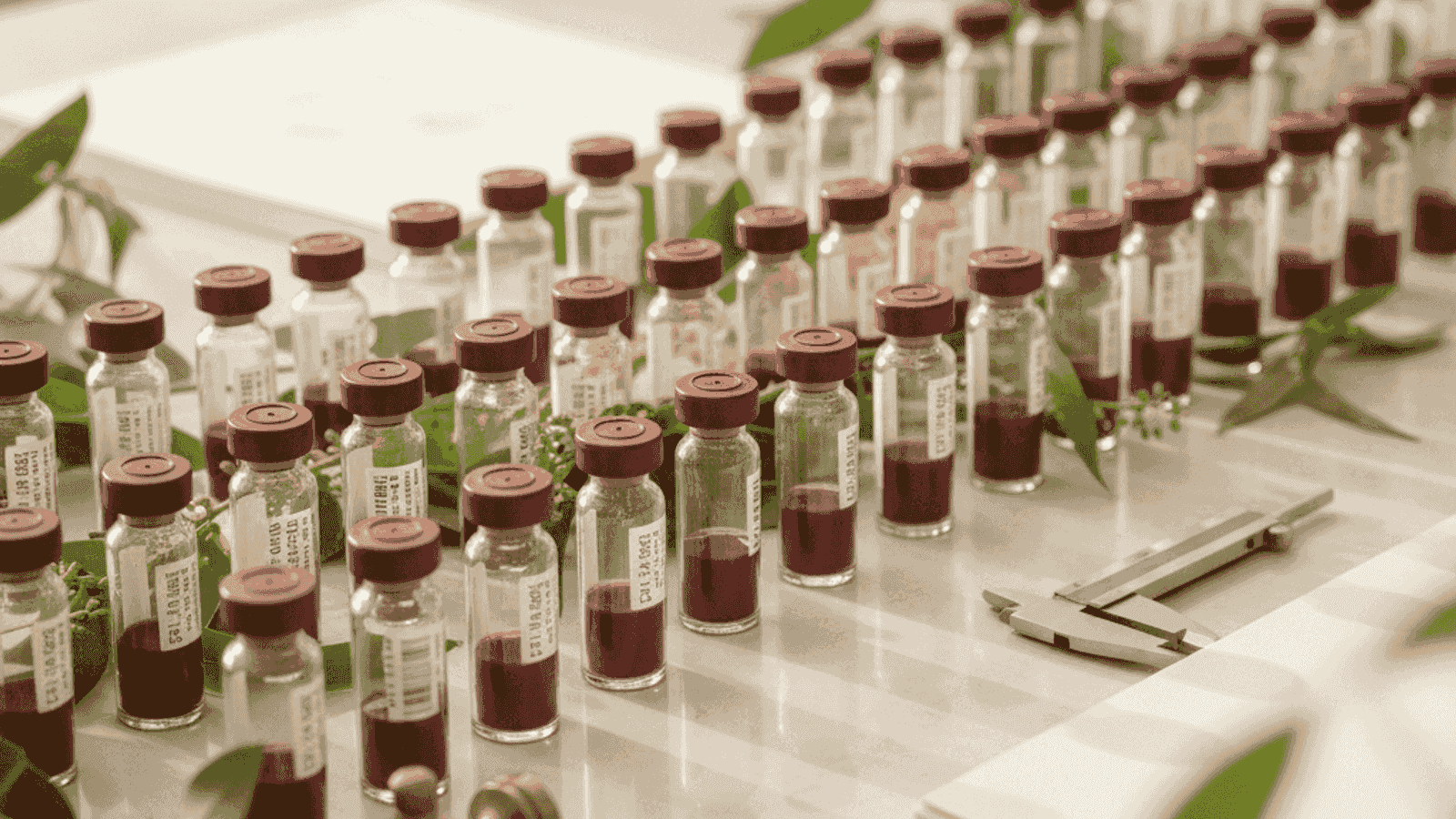

StandardsWhat the MODE System Means
ProGrade organizes its catalog by research outcome, not chemical class. Here is what MODE-M, MODE-R, MODE-L, and MODE-P stand for — and why it makes research easier.
Read overviewProGrade Research
Compound explainers, goal guides, and lab standards — cited, scannable, and written for a research audience. Every article is grounded in published literature and framed strictly for research use.

From single-agonist GLP-1 compounds to triple agonists, amylin analogs, and GHRH analogs — a map of the peptides that define modern metabolic research.
StandardsProGrade organizes its catalog by research outcome, not chemical class. Here is what MODE-M, MODE-R, MODE-L, and MODE-P stand for — and why it makes research easier.
Read overview
StandardsWhat a certificate of analysis actually documents, how HPLC and mass spectrometry establish purity and identity, and why per-batch COAs matter.
Read overview
EducationA clear, general laboratory guide to reconstituting lyophilized research peptides with bacteriostatic water — the terms, the tools, and best practices.
Read overview
Goal GuideTelomere biology, cellular energy, redox balance, and collagen remodeling — a map of the compounds that define longevity peptide research.
Read overview
Goal GuideTwo of the most-studied recovery peptides, compared. How BPC-157 and TB-500 differ in the tissue-repair literature — and why they are so often studied together.
Read overview
Compound GuideTesamorelin is a growth-hormone-releasing hormone (GHRH) analog studied in visceral-adipose and GH-axis research. A concise research summary.
Read overview
Compound GuideGHK-Cu is a naturally occurring copper tripeptide studied in collagen-synthesis, wound-healing, and hair-follicle research. What the literature describes.
Read overview
Compound GuideNAD+ is a coenzyme central to cellular energy, DNA-repair, and sirtuin-pathway research. A primer on why it is a fixture of longevity science.
Read overview
Compound GuideTirzepatide is a dual GLP-1 / GIP receptor agonist widely studied in metabolic and glucoregulatory research. Here is how the dual mechanism is described in the literature.
Read overview
Compound GuideBPC-157 is a synthetic pentadecapeptide widely studied in tissue-repair and regeneration models. A plain-language summary of the research literature.
Read overview
Compound GuideRetatrutide is a triple-agonist peptide targeting the GLP-1, GIP, and glucagon receptors. Here is what the metabolic research literature describes — framed for laboratory study.
Read overview