GHK-Cu is among the most studied copper-binding peptides in the skin and tissue-remodeling literature. Its combination of a short tripeptide sequence with a bound copper ion gives it a distinctive place in regeneration research. This overview summarizes the compound and the research pathways it is associated with.
Key takeaways
- 1.GHK-Cu is a copper complex of the tripeptide glycyl-L-histidyl-L-lysine (GHK).
- 2.It is studied in collagen-synthesis, wound-healing, and hair-follicle research models.
- 3.The bound copper ion is integral to how the peptide is investigated.
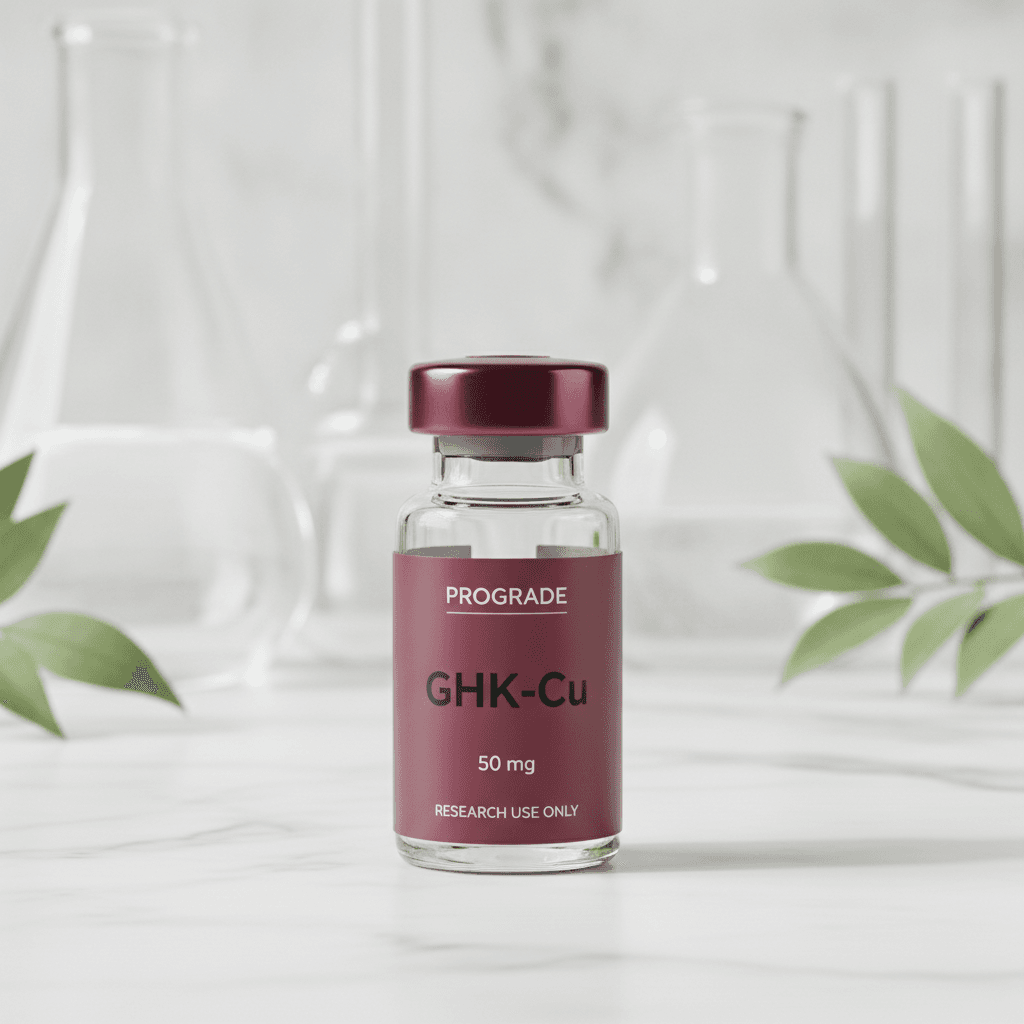
- 4.ProGrade supplies GHK-Cu at ≥99% purity (HPLC / MS) as a 50 mg vial.
What is GHK-Cu?
GHK-Cu is the copper complex of a naturally occurring tripeptide called GHK — glycyl-L-histidyl-L-lysine. A tripeptide is simply a peptide of three amino acids; in this case the sequence has a strong affinity for copper ions, and the biologically studied form carries a bound copper (Cu) atom, hence "GHK-Cu."
The copper is not incidental. Much of the research interest centers on the peptide-copper complex as a unit, because the copper ion participates in the biochemistry the literature examines.
Research pathways associated with GHK-Cu
The most heavily studied theme is collagen and extracellular-matrix remodeling. Research models examine GHK-Cu in the context of collagen synthesis and the turnover of the connective-tissue scaffolding that skin and other tissues depend on.
A second theme is wound-healing and tissue repair, where GHK-Cu appears alongside other regeneration-associated compounds. A third is hair-follicle biology, which is why GHK-Cu is a recurring subject in skin-and-hair research. These pathways are the reason it is cross-tagged to both recovery and skin-and-hair research in a well-organized catalog.
GHK-Cu is studied where three research themes overlap — collagen remodeling, wound repair, and hair-follicle biology.
GHK-Cu in research blends
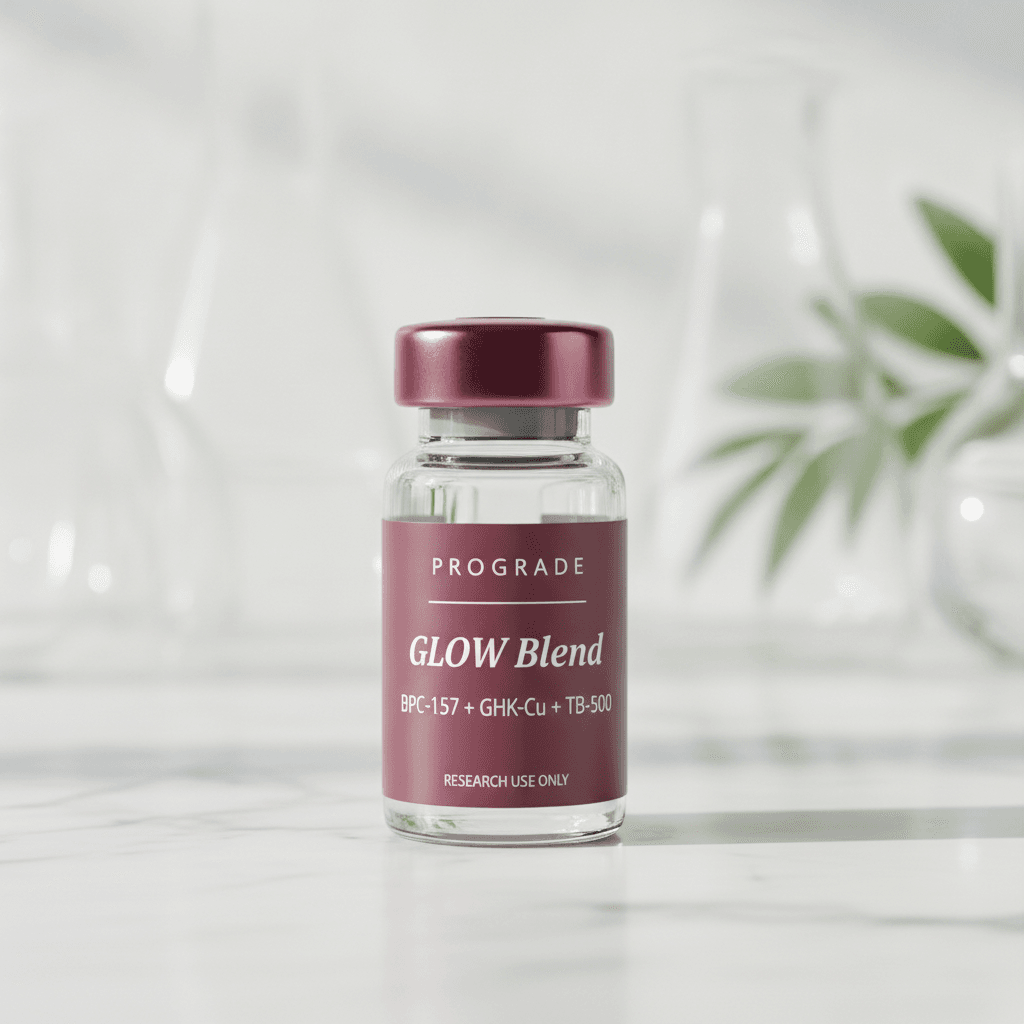
GHK-Cu is frequently studied alongside repair peptides. ProGrade's GLOW Blend combines GHK-Cu with BPC-157 and TB-500, bringing collagen and skin-remodeling pathways into the same prepared preparation as the tissue-repair compounds — a common configuration in the recovery-and-skin literature.
Form, purity, and handling
GHK-Cu is supplied as a lyophilized powder (with its characteristic blue color from the bound copper) and prepared with bacteriostatic water before research use. It is stored refrigerated, protected from light, and frozen for long-term storage.
ProGrade specifies ≥99% purity (HPLC / MS) with per-batch COA access for each lot.
- Class: copper tripeptide (glycyl-L-histidyl-L-lysine + Cu)
- Research themes: collagen synthesis, wound repair, hair follicles
- Size: 50 mg research vial
- Purity: ≥99% (HPLC / MS), per-batch COA
Research use only
This article is provided for educational and informational purposes and summarizes published laboratory and preclinical research. All ProGrade Peptides products are sold strictly for in-vitro laboratory and research use only (RUO). Nothing here is medical advice, a therapeutic claim, or a protocol for human or animal use. These compounds are not intended to diagnose, treat, cure, or prevent any disease.
Frequently asked questions
GHK refers to the tripeptide glycyl-L-histidyl-L-lysine; Cu is the chemical symbol for copper. GHK-Cu is the copper complex of that tripeptide.
The GHK sequence has a high affinity for copper ions, and the biologically studied form carries a bound copper atom. The copper participates in the biochemistry the research literature examines.
It is most often studied in collagen-synthesis and extracellular-matrix remodeling, wound-healing, and hair-follicle research models.
No. ProGrade supplies GHK-Cu strictly for in-vitro laboratory and research use only.