Tirzepatide is a cornerstone compound in modern metabolic research and a common reference point for the newer multi-agonist peptides. This overview explains what the dual-agonist design means, how tirzepatide is positioned relative to single- and triple-agonist compounds, and how it is handled in the laboratory.
Key takeaways
- 1.Tirzepatide is a synthetic peptide studied as a dual agonist of the GLP-1 and GIP receptors.
- 2.The dual mechanism distinguishes it from single-agonist (GLP-1 only) research compounds.
- 3.It is a frequent comparison reference for triple-agonist compounds such as retatrutide.
- 4.ProGrade supplies it at ≥99% purity (HPLC / MS) with per-batch COA access.
What is tirzepatide?
Tirzepatide is a synthetic peptide that acts as an agonist at two incretin receptors: the GLP-1 receptor and the GIP (glucose-dependent insulinotropic polypeptide) receptor. Because it targets both, it is described as a "dual agonist" or "twincretin" in the research literature.
The incretin system is a set of gut-derived hormone signals involved in glucose handling and energy balance. Tirzepatide's design engages two of those signals with a single molecule, which is the defining structural idea behind it.
How the dual-agonist mechanism is studied
In research models, GLP-1 receptor activity is examined in the context of glucose-dependent insulin signaling and satiety pathways, while GIP receptor activity is studied as a complementary incretin axis. The hypothesis that motivates the dual design is that engaging both receptors together yields effects that differ from engaging either alone.
This is the same logic that later produced triple agonists — tirzepatide is essentially the two-receptor waypoint on that design trajectory, which is why it appears so often as a comparison arm in metabolic studies.
Tirzepatide is the two-receptor reference point that newer multi-agonist research compounds are measured against.
Tirzepatide vs. single- and triple-agonists
On the receptor-coverage spectrum, single-agonist GLP-1 compounds sit at one end, tirzepatide (GLP-1 + GIP) in the middle, and triple agonists such as retatrutide (GLP-1 + GIP + glucagon) at the far end. Researchers often keep several of these on hand precisely to study how receptor coverage changes outcomes in their models.
If your catalog organizes metabolic peptides by mechanism, tirzepatide is the canonical dual-agonist entry — the one most other multi-receptor compounds are benchmarked against.
Form, purity, and handling
Tirzepatide is supplied as a lyophilized powder and prepared with bacteriostatic water before research use. Vials are stored refrigerated, protected from light, and can be frozen for long-term storage.
ProGrade specifies ≥99% purity (HPLC / MS) with a per-batch certificate of analysis, so identity and purity are documented for each lot rather than assumed.
- Mechanism: dual GLP-1 / GIP receptor agonist
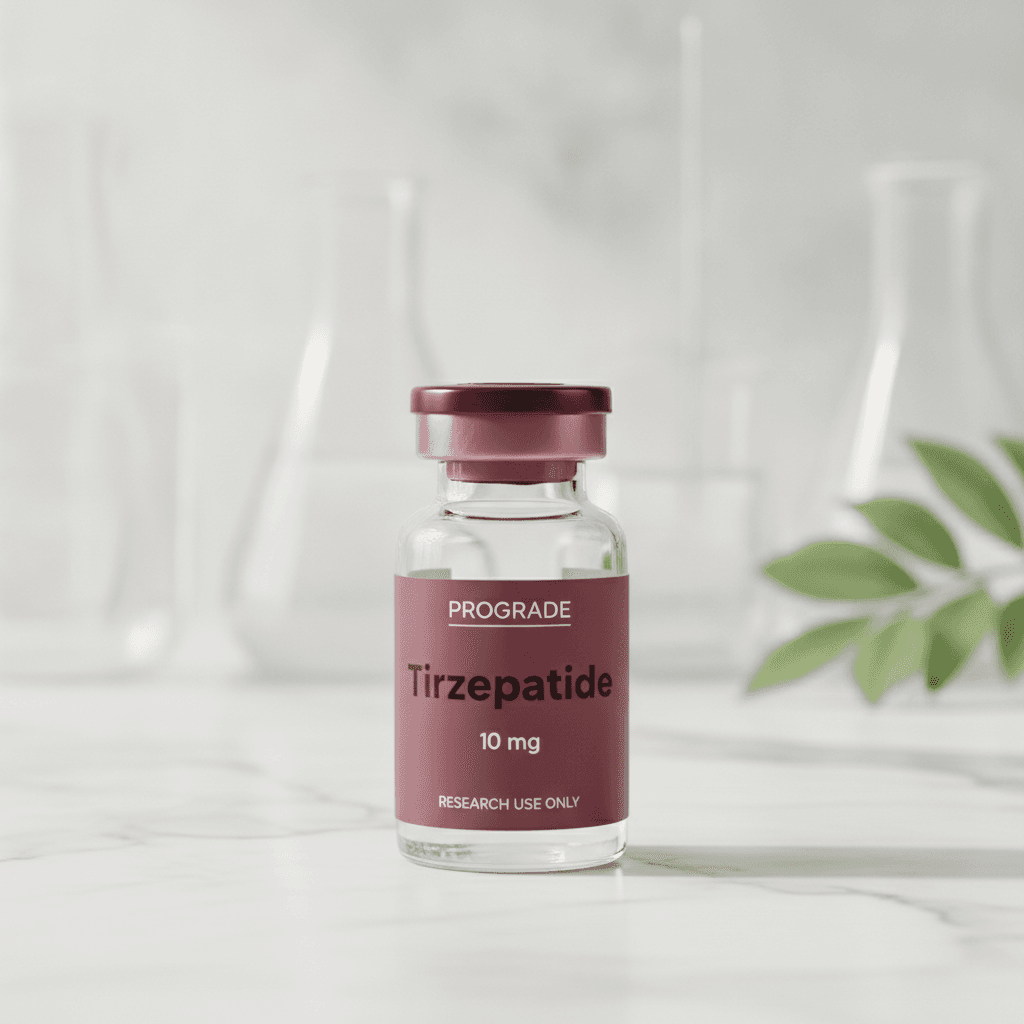
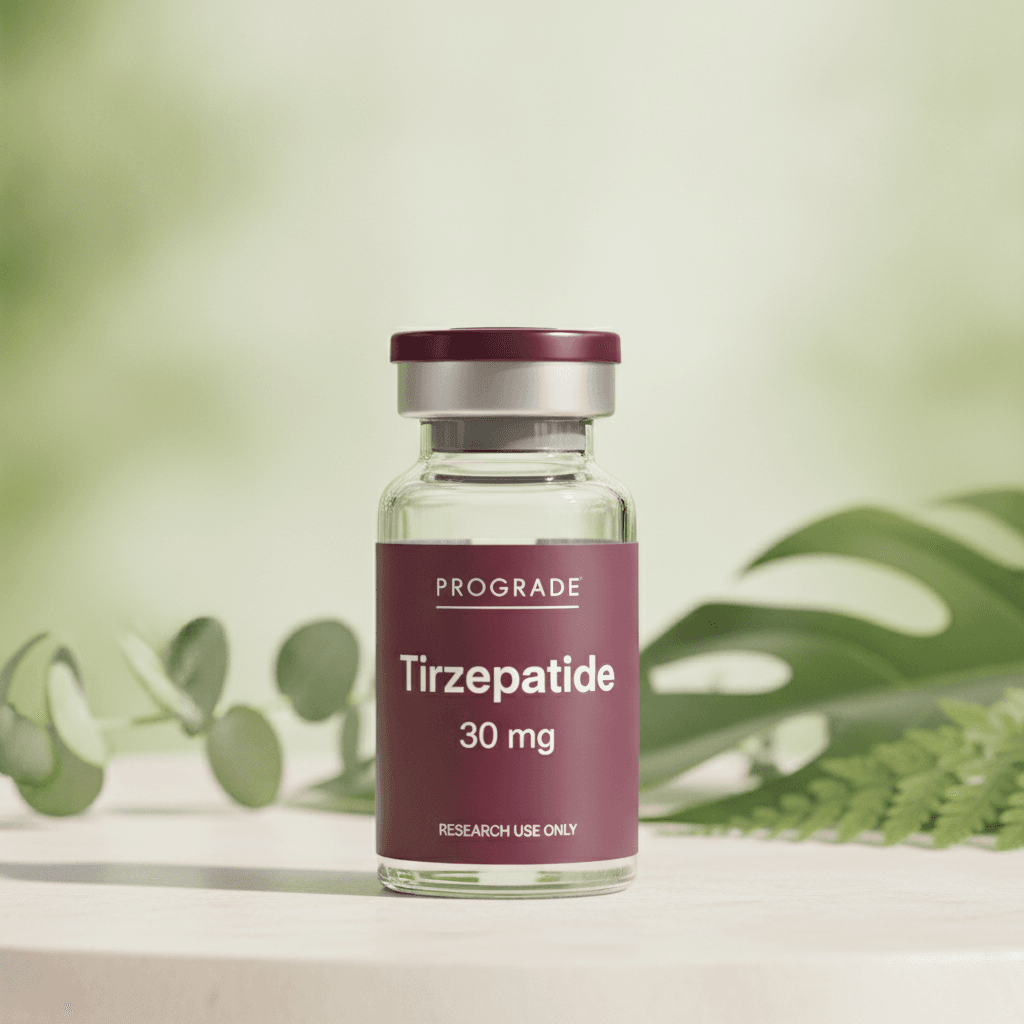
- Available sizes: 10 mg and 30 mg research vials
- Purity: ≥99% (HPLC / MS), per-batch COA
- Storage: refrigerate; freeze for long-term; protect from light
Research use only
This article is provided for educational and informational purposes and summarizes published laboratory and preclinical research. All ProGrade Peptides products are sold strictly for in-vitro laboratory and research use only (RUO). Nothing here is medical advice, a therapeutic claim, or a protocol for human or animal use. These compounds are not intended to diagnose, treat, cure, or prevent any disease.
Frequently asked questions
Tirzepatide is studied as a dual agonist of the GLP-1 receptor and the GIP receptor — the reason it is often called a 'twincretin' in the literature.
Tirzepatide engages two receptors (GLP-1 and GIP). Retatrutide is studied as a triple agonist that adds glucagon-receptor activity as a third target.
ProGrade supplies tirzepatide as 10 mg and 30 mg lyophilized research vials, both at ≥99% purity with per-batch COA access.
No. It is sold strictly for in-vitro laboratory and research use only and is not a supplement or medication.