BPC-157 is one of the most frequently referenced peptides in tissue-repair research. Its name — Body Protection Compound-157 — reflects the context in which it was first characterized. This overview summarizes what the published preclinical literature describes about its structure and the research pathways it is associated with, written for laboratory reference.
Key takeaways
- 1.BPC-157 is a synthetic pentadecapeptide (15 amino acids) derived from a sequence identified in gastric juice.
- 2.It is studied extensively in preclinical tissue-repair, angiogenesis, and connective-tissue research models.
- 3.In ProGrade's catalog it appears within research blends alongside TB-500 and GHK-Cu.
- 4.It is supplied for in-vitro laboratory research use only and prepared before use.
What is BPC-157?
BPC-157 is a synthetic peptide composed of 15 amino acids — making it a pentadecapeptide. Its sequence corresponds to a fragment identified within a protein found in gastric juice, which is the origin of the "Body Protection Compound" name used throughout the literature.
As a research compound it is valued for its stability and its recurring appearance across tissue-repair study models. It is a stable peptide that is straightforward to prepare and handle in a laboratory setting.
What research pathways is BPC-157 associated with?
The preclinical literature most often studies BPC-157 in the context of angiogenesis — the formation of new blood vessels — and connective-tissue repair. Research models have examined its relationship to tendon, ligament, muscle, and gastrointestinal-lining repair processes.
A frequently cited theme is its interaction with growth-factor signaling and the vascular endothelial growth factor (VEGF) pathway, which is central to how tissue re-vascularizes during repair. These are the mechanistic hooks researchers reach for when they design studies around it.
In the preclinical literature, BPC-157 recurs across angiogenesis and connective-tissue repair models — the reason it is a staple of recovery research.
BPC-157 in research blends
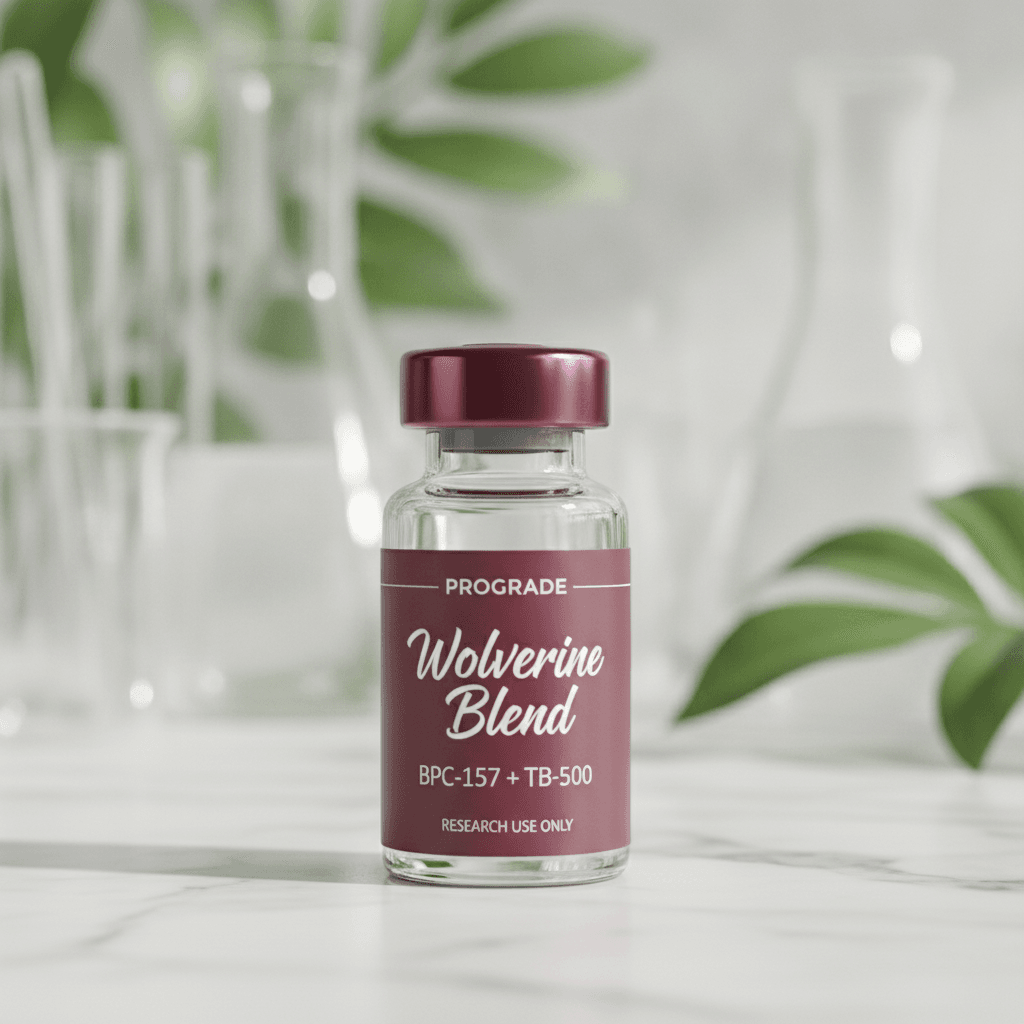
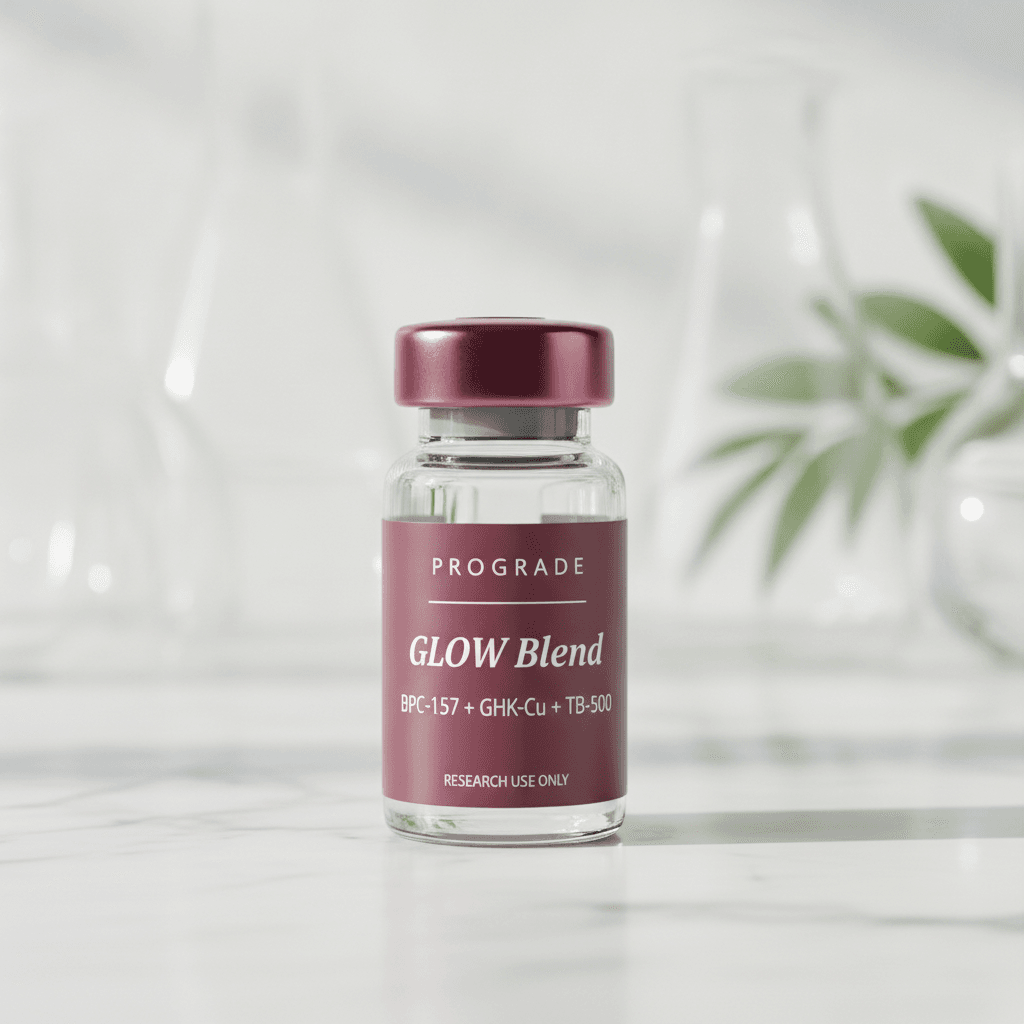
BPC-157 is often studied alongside other repair-associated compounds. ProGrade's Wolverine Blend pairs BPC-157 with TB-500 (thymosin beta-4 fragment), and the GLOW Blend combines BPC-157 with GHK-Cu and TB-500 to bring collagen and skin-remodeling pathways into the same research context.
These combinations exist because the compounds are frequently investigated together in the recovery literature — a blend lets a research protocol hold several of those variables in a single prepared preparation.
Form, purity, and handling
BPC-157 is supplied as a lyophilized powder and prepared with bacteriostatic water prior to research use. Vials are stored refrigerated and protected from light, with freezing recommended for long-term storage.
ProGrade's BPC-157-containing blends are specified at ≥99% purity (HPLC / MS) per component, with per-batch COA access so each lot's identity and purity are documented.
- Class: synthetic pentadecapeptide (15 amino acids)
- Common research pairings: TB-500, GHK-Cu
- Purity: ≥99% (HPLC / MS) per component
- Storage: refrigerate; freeze for long-term; protect from light
Research use only
This article is provided for educational and informational purposes and summarizes published laboratory and preclinical research. All ProGrade Peptides products are sold strictly for in-vitro laboratory and research use only (RUO). Nothing here is medical advice, a therapeutic claim, or a protocol for human or animal use. These compounds are not intended to diagnose, treat, cure, or prevent any disease.
Frequently asked questions
BPC-157 stands for Body Protection Compound-157. The name reflects the gastric-juice protein sequence from which the peptide fragment was originally characterized.
Yes. The two are frequently investigated together in recovery research. ProGrade's Wolverine Blend combines BPC-157 with TB-500 for exactly this reason.
BPC-157 is a pentadecapeptide, meaning it is made of 15 amino acids.
No. It is supplied strictly for in-vitro laboratory and research use only and is not intended for human or animal consumption.