BPC-157 and TB-500 are the two names that come up most often in recovery-peptide research, and they are frequently mentioned in the same breath. But they are distinct compounds with different origins and different research pathways. This guide compares them and explains why they are so often combined in study models.
Key takeaways
- 1.BPC-157 is a synthetic pentadecapeptide studied in angiogenesis and connective-tissue repair.
- 2.TB-500 is a fragment of thymosin beta-4 studied in cell-migration and tissue-repair models.
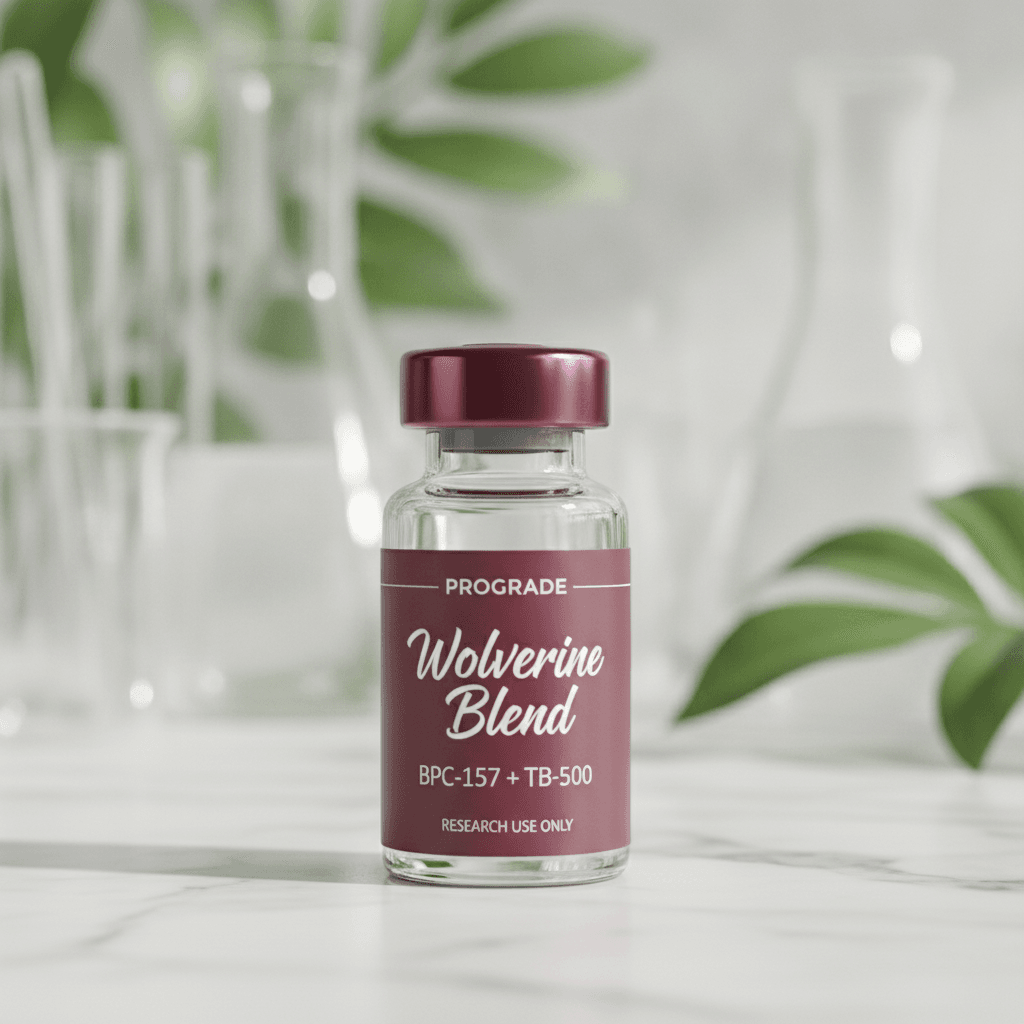
- 3.The two are complementary and are frequently studied together — the basis for ProGrade's Wolverine Blend.
- 4.Both are supplied for in-vitro laboratory research use only.
BPC-157 in brief
BPC-157 is a synthetic pentadecapeptide — 15 amino acids — corresponding to a sequence identified in gastric juice, which is the source of its "Body Protection Compound" name. In the preclinical literature it is studied most in the context of angiogenesis (new blood-vessel formation) and connective-tissue repair, including tendon, ligament, and muscle models, as well as gastrointestinal-lining repair.
Its recurring mechanistic association is with growth-factor and VEGF signaling — the pathways involved in re-vascularizing tissue during repair.
TB-500 in brief
TB-500 is a synthetic peptide fragment based on thymosin beta-4, a naturally occurring protein involved in cell structure and motility. Where BPC-157 is studied around vascularization, TB-500's research centers on actin regulation and cell migration — the processes by which cells move to and organize at a site of repair.
This is the core difference: the two compounds are studied on different but adjacent arms of the tissue-repair process, which is exactly what makes them interesting to investigate side by side.
BPC-157 is studied around vascularization; TB-500 around cell migration. Different arms of the same repair process — which is why they pair.
Side-by-side: how they differ
Both are stable synthetic peptides supplied as lyophilized powders and prepared before research use, and both are filed under recovery research. The differences are in origin and mechanism.
- Origin — BPC-157: gastric-juice-derived sequence · TB-500: thymosin beta-4 fragment
- Primary research theme — BPC-157: angiogenesis + connective-tissue repair · TB-500: actin/cell-migration + tissue repair
- Common pairing — the two are frequently studied together
- Form — both lyophilized, prepared with bacteriostatic water
Why they are studied together
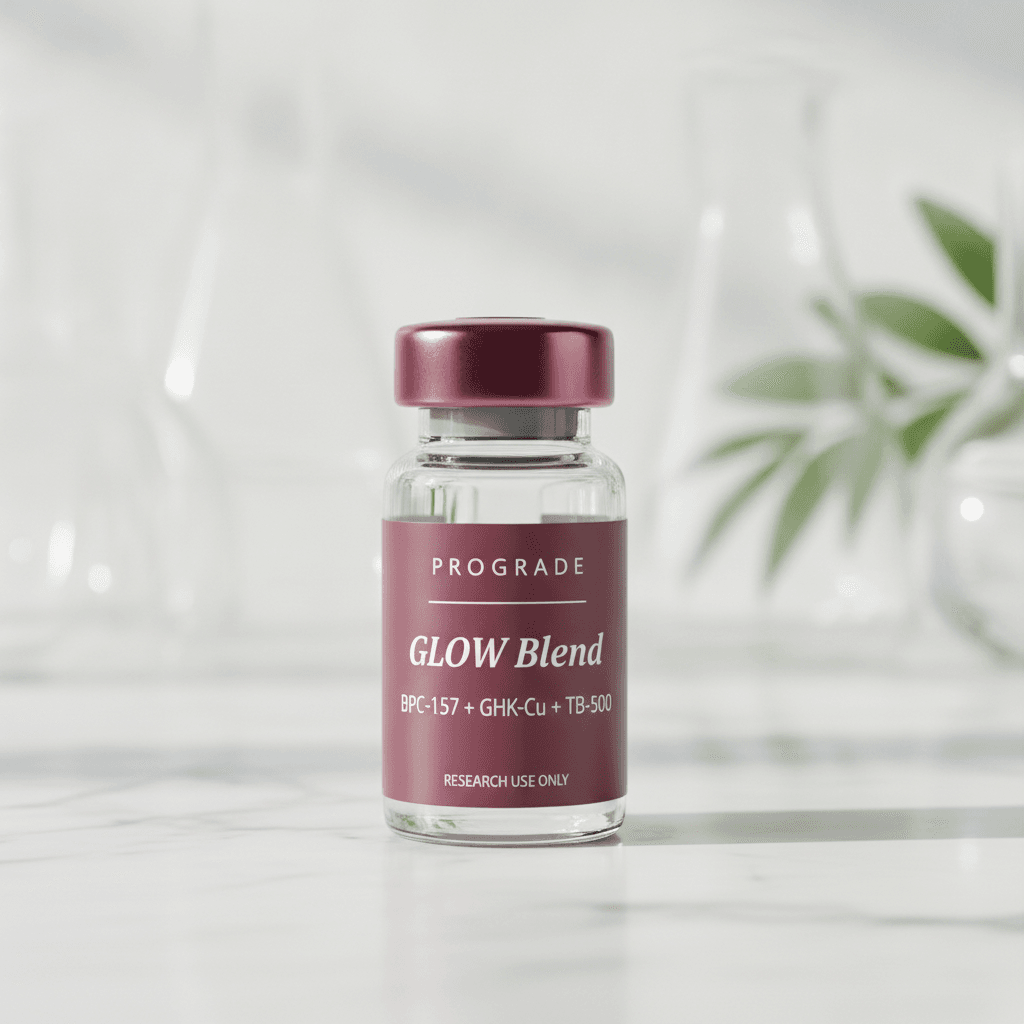
Because BPC-157 and TB-500 engage complementary parts of the repair process, the recovery literature frequently investigates them in combination. ProGrade's Wolverine Blend packages the two together (BPC-157 10 mg + TB-500 10 mg) so a research protocol can hold both variables in a single prepared preparation. The GLOW Blend extends the pairing further by adding GHK-Cu for collagen and skin-remodeling pathways.
If your research question is about tissue repair broadly, studying the two in tandem is the most common configuration in the literature — which is why the blend exists as a catalog item.
Research use only
This article is provided for educational and informational purposes and summarizes published laboratory and preclinical research. All ProGrade Peptides products are sold strictly for in-vitro laboratory and research use only (RUO). Nothing here is medical advice, a therapeutic claim, or a protocol for human or animal use. These compounds are not intended to diagnose, treat, cure, or prevent any disease.
Frequently asked questions
BPC-157 is a gastric-juice-derived pentadecapeptide studied around angiogenesis and connective-tissue repair. TB-500 is a thymosin beta-4 fragment studied around actin regulation and cell migration. They engage complementary parts of the repair process.
Yes — they are frequently investigated together in recovery research. ProGrade's Wolverine Blend combines both in a single preparation for exactly this purpose.
TB-500 is a synthetic peptide fragment based on thymosin beta-4, a naturally occurring protein involved in cell structure and motility.
No. BPC-157, TB-500, and all ProGrade recovery blends are supplied strictly for in-vitro laboratory and research use only.