Any supplier can report a purity number for its own product. The question a careful research buyer asks is: who measured it? Third-party testing — analysis by an independent laboratory rather than the seller — is what converts a self-reported figure into a credible one. This guide explains why independent verification matters, what it does and doesn't guarantee, and how to check that a vendor's testing is actually independent.
Key takeaways
- 1.Third-party testing means an independent lab, not the seller, measured the compound's purity and identity.
- 2.It removes the conflict of interest inherent in a vendor grading its own product.
- 3.Verify it by checking that the COA names an independent lab and ties to your batch.
- 4.ProGrade backs its ≥99% purity spec with third-party, per-batch COA access.
The conflict of interest in self-reporting
When a vendor tests its own product and publishes the result, the party with the strongest incentive to see a high number is the one producing it. That is not an accusation of bad faith — it is a structural conflict of interest that exists regardless of intent. Independent testing exists precisely to remove that structure.
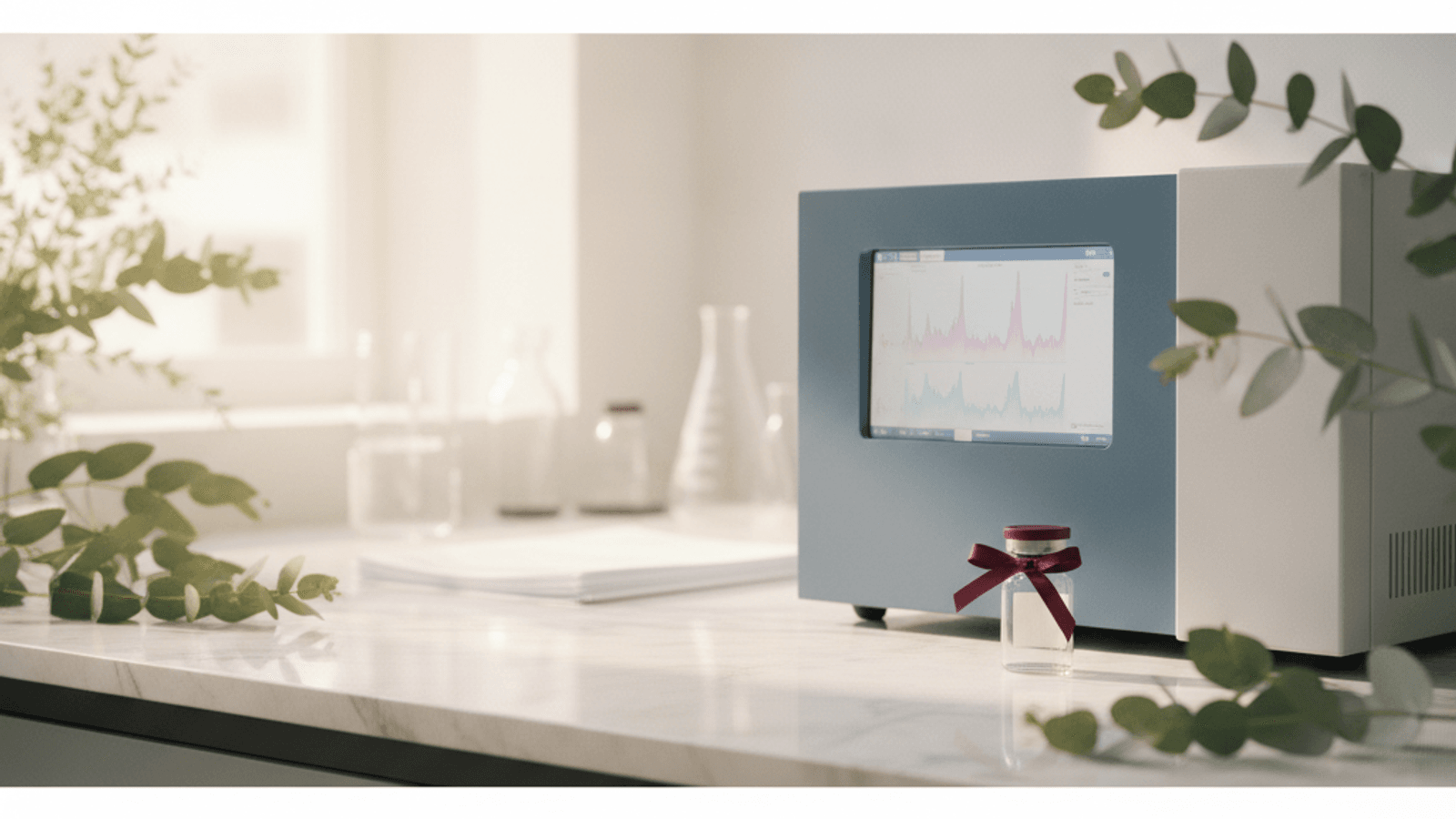
A third-party laboratory has no stake in the outcome. When an independent lab runs HPLC and mass spectrometry on a batch and reports the numbers, the result carries a credibility that an in-house figure cannot, because the measurement and the sale are separated.
Self-reported purity grades the vendor's own homework. Independent testing separates the measurement from the sale.
What third-party testing does — and doesn't — guarantee
Independent testing guarantees that a neutral party measured the sample it was given, using stated analytical methods. That is a meaningful assurance about purity and identity. What it cannot do by itself is prove that the tested sample matches your specific vial — which is why third-party testing and per-batch documentation work together.
The strongest position combines the two: an independent lab's analysis, reported per batch, with a lot number that matches your vial. That pairing closes both gaps at once — the measurement is neutral and it applies to your product.
How to verify testing is really independent
Verification is a matter of reading the certificate. A genuine third-party COA names the laboratory that performed the analysis and states the methods used. If the certificate is anonymous — no lab name, no method, no batch — there is nothing independent to verify.
- Named laboratory — the COA identifies who ran the analysis
- Stated methods — HPLC for purity, MS for identity
- Batch match — the lot number ties the certificate to your vial
- Recent date — the test corresponds to the production run, not a years-old figure
The standard to hold suppliers to
Put together, the standard is straightforward: independent analysis, reported per batch, with named methods and a matching lot number. A supplier that meets it is documenting quality rather than asserting it — and for reproducible research, documentation is the difference that matters.
ProGrade's positioning is built on this. Every compound is specified at ≥99% purity (HPLC / MS) with third-party, per-batch COA access, so the purity claim is verifiable independently and tied to the exact lot you receive.
Research use only
This article is provided for educational and informational purposes and summarizes published laboratory and preclinical research. All ProGrade Peptides products are sold strictly for in-vitro laboratory and research use only (RUO). Nothing here is medical advice, a therapeutic claim, or a protocol for human or animal use. These compounds are not intended to diagnose, treat, cure, or prevent any disease.
Frequently asked questions
It means an independent laboratory — not the seller — performed the analysis that establishes a compound's purity and identity. This removes the conflict of interest inherent in a vendor testing its own product.
Read the certificate of analysis. A genuine third-party COA names the laboratory that ran the analysis, states the methods (HPLC / MS), and ties to a batch number that matches your vial. An anonymous certificate with none of these can't be verified.
On its own, it proves a neutral party measured the sample it was given. Combined with per-batch documentation and a matching lot number, it also confirms the result applies to your specific vial — which is why the two work together.
Yes. ProGrade backs its ≥99% purity specification with third-party, per-batch certificate of analysis access, so the purity and identity results are independently measured and tied to your lot.