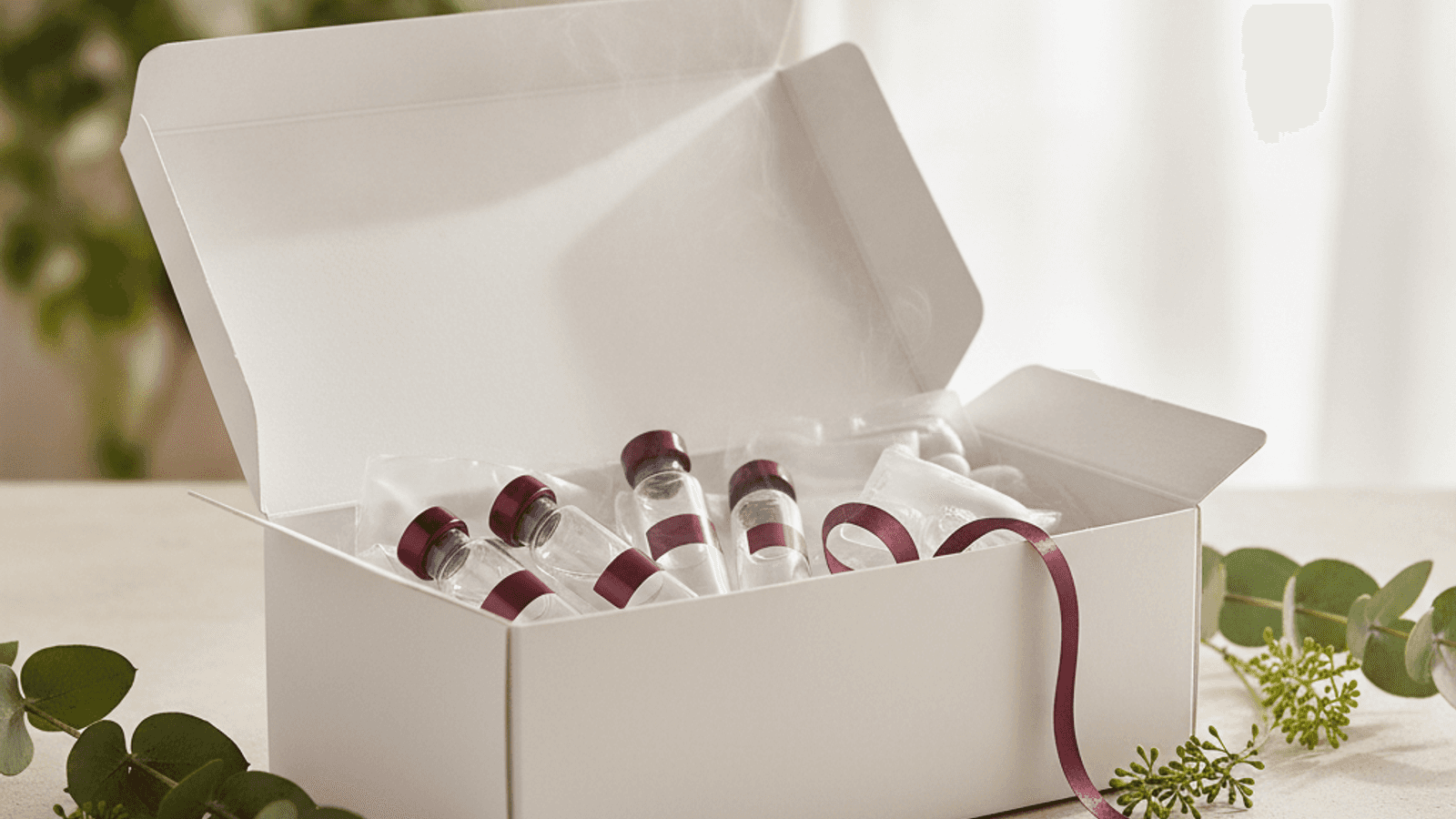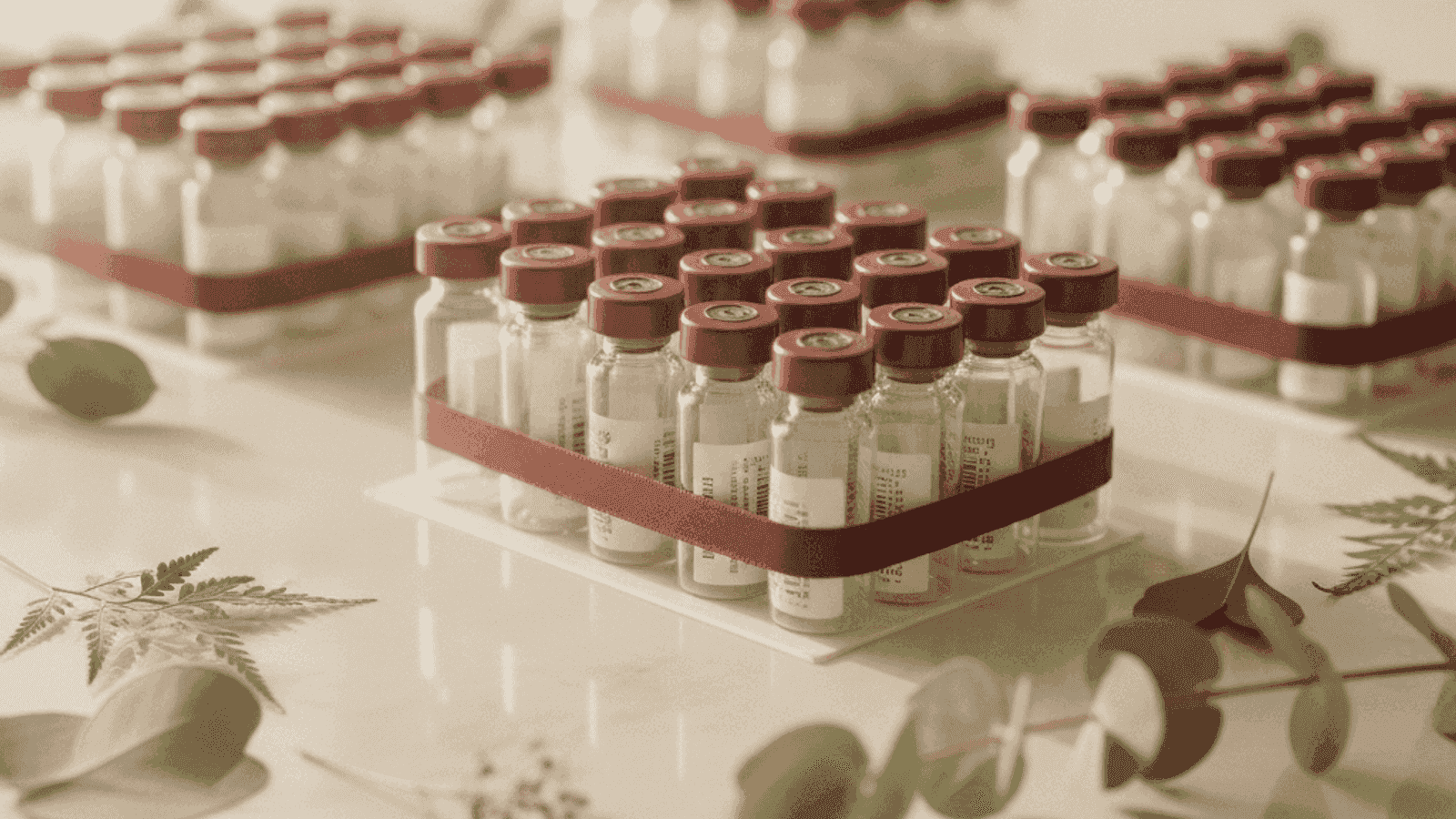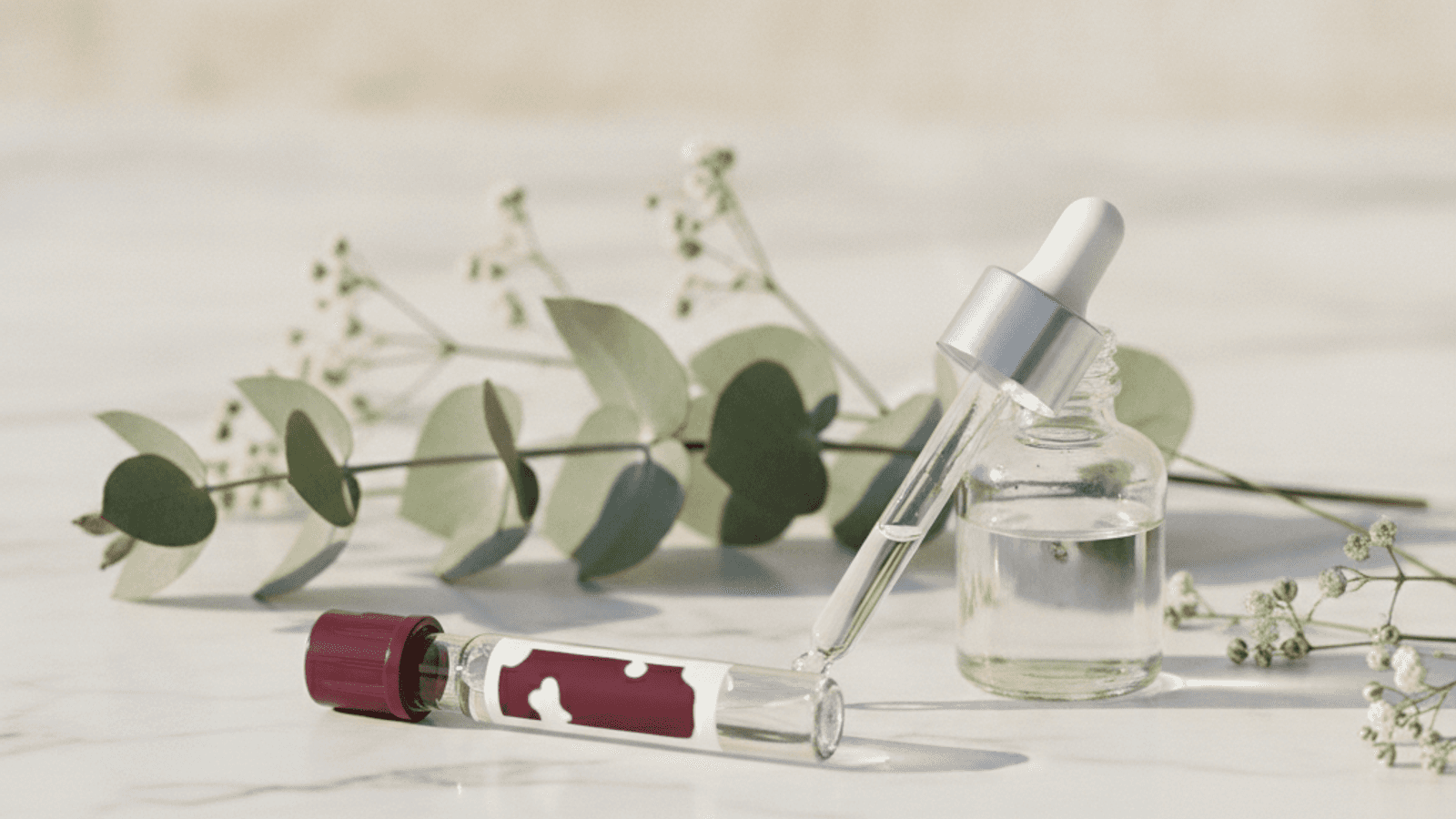
Most research peptides ship as a lyophilized (freeze-dried) powder that must be reconstituted into solution before laboratory use. This is a general, educational overview of the reconstitution process and the terminology around it — written for a research setting, not as instruction for any human or animal application.
Key takeaways
- 1.Lyophilized peptides are reconstituted by dissolving the powder in a suitable solvent, typically bacteriostatic water.
- 2.Bacteriostatic water contains 0.9% benzyl alcohol, which inhibits bacterial growth in multi-draw research vials.
- 3.Gentle technique matters: solvent is added slowly against the vial wall, never injected forcefully onto the powder.
- 4.Reconstituted vials are stored refrigerated; bacteriostatic water is the standard research solvent stocked under MODE Supply.
What 'reconstitution' means
Reconstitution is the process of turning a dried peptide back into a liquid solution. During manufacturing, peptides are lyophilized — frozen and dried under vacuum — because the powder form is far more stable for shipping and storage. Before the compound can be used in research, that powder is dissolved back into a solvent.
The lyophilized form is why your vial arrives as a small amount of white powder or a thin cake at the bottom of the vial. Reconstitution is simply the controlled step of putting it back into solution.
Choosing a solvent: bacteriostatic water
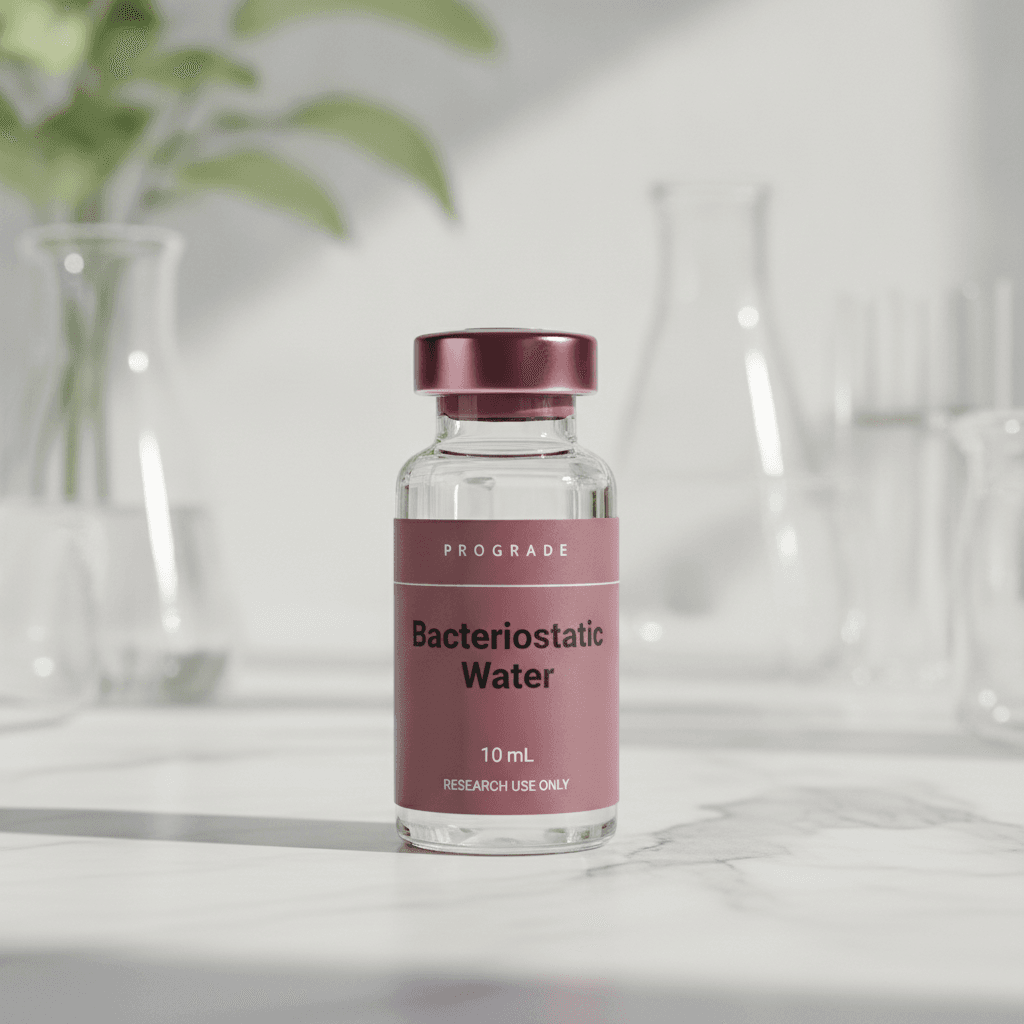
The standard solvent for reconstituting research peptides is bacteriostatic water — sterile water containing 0.9% benzyl alcohol. The benzyl alcohol acts as a bacteriostatic agent, meaning it inhibits bacterial growth, which is useful when a research vial will be drawn from multiple times over a period of days.
This is distinct from sterile water or plain saline, which contain no preservative. For multi-draw research vials, bacteriostatic water is the conventional choice, which is why ProGrade stocks it under the Essential Supply (MODE Supply) category as the companion to every lyophilized compound.
Bacteriostatic water's 0.9% benzyl alcohol inhibits bacterial growth — the reason it is the standard solvent for multi-draw research vials.
The general reconstitution steps
The following is a general description of laboratory reconstitution technique. Exact solvent volumes depend entirely on the specific research protocol and the concentration a study calls for.
- 1. Let both the peptide vial and the bacteriostatic water reach room temperature, and wipe both rubber stoppers with an alcohol swab.
- 2. Draw the chosen volume of bacteriostatic water into a sterile syringe.
- 3. Insert the needle into the peptide vial at an angle and let the solvent run slowly down the inside wall of the vial — do not spray it directly onto the powder.
- 4. Do not shake. Let the vial sit, or swirl gently, until the powder fully dissolves into a clear solution.
- 5. Label the vial with the compound, concentration, and reconstitution date, then store it refrigerated.
Storage and handling after reconstitution
Once reconstituted, most peptide solutions are stored refrigerated (2–8°C) and protected from light. Unopened lyophilized vials are the most stable form and can be frozen for long-term storage; once in solution, the working shelf life is shorter and depends on the compound.
Good labeling and cold-chain discipline are what keep research reproducible — a clearly dated, refrigerated vial removes ambiguity about a preparation's age and concentration.
Research use only
This article is provided for educational and informational purposes and summarizes published laboratory and preclinical research. All ProGrade Peptides products are sold strictly for in-vitro laboratory and research use only (RUO). Nothing here is medical advice, a therapeutic claim, or a protocol for human or animal use. These compounds are not intended to diagnose, treat, cure, or prevent any disease.
Frequently asked questions
Bacteriostatic water — sterile water with 0.9% benzyl alcohol — is the standard solvent. The benzyl alcohol inhibits bacterial growth, which suits multi-draw research vials.
Peptides are delicate molecules, so the convention is to add solvent gently against the vial wall and swirl rather than shake, to fully dissolve the powder without unnecessary agitation.
Bacteriostatic water contains 0.9% benzyl alcohol as a preservative that inhibits bacterial growth; sterile water and saline contain no preservative, making bacteriostatic water preferable for multi-draw research vials.
Yes. Bacteriostatic water is stocked under the Essential Supply category as the standard reconstitution solvent for the lyophilized research compounds in the catalog.